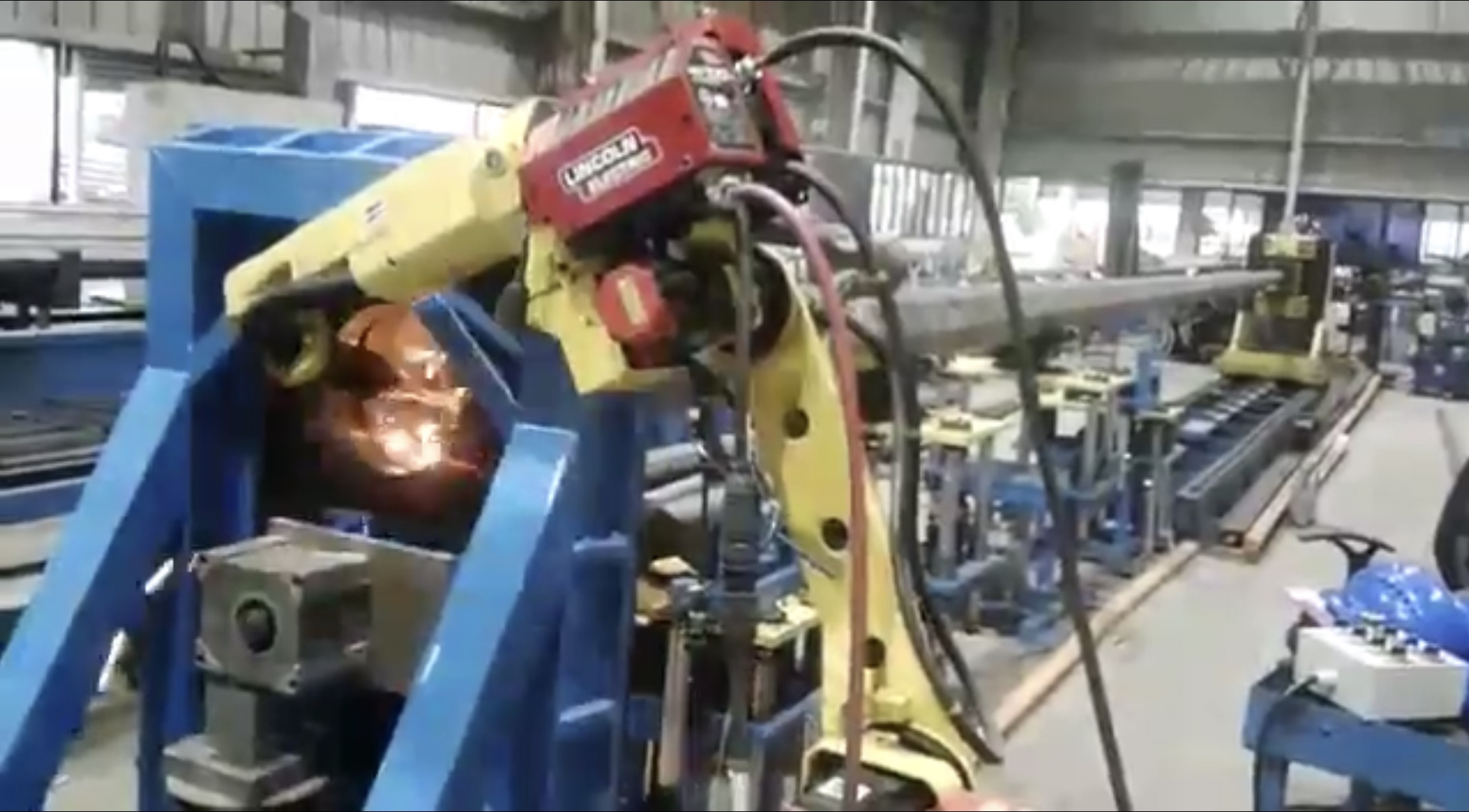
A robotic welding cell we built and delivered to Valmont, India.
I ran a manufacturing business for twenty years. It has run without me in the building since 2016 and it is still growing. I help other manufacturing owners get there.
A robotic welding cell we built and delivered to Valmont, India.
In one business that manufactured welding equipment, delivered turnkey custom solutions for robotic welding automation, and is a distributor for Tregaskiss of Canada.
What I cut my own hours down to, in about six months, while revenue kept climbing.
How long the business has run without me in the building. It's still growing. I'm still on the board.
I turn people away for this, so it's fairer to say it here than on a call.
Below that there is nobody to hand the work to. The problem isn't your systems, it's that you don't yet have a team to build them around.
Younger than that and the business is still working out what it is. Your hours belong in it right now, and pulling them out would hurt you.
Stepping back costs something before it pays. If things are tight, fix that first. This work will still be here.
If all three aren't true yet, your business genuinely still needs you in it. Come back when they are and I'll be glad to talk.
And if you've read that and still want a conversation, have it anyway. I'd rather tell you honestly on a call than leave you wondering.
There's no diagnosis needed here. Read the list. You'll feel it or you won't. You don't have to recognise them all, but if at least two land, this is worth a conversation.
Twelve consecutive weeks, one to two hours with me each week, and set work between sessions. We measure one thing at the end: how much less you are physically needed, and whether the business grew anyway.
We find out where your hours actually go and which decisions genuinely require you. Most owners are wrong about both.
We write down how the work is really done and put the rules in place so the answers stop living only in your head.
The hard part. Real handoffs to real people, and holding your nerve through the first things that get done differently than you'd do them.
We make it stick so it doesn't quietly slide back the first time something goes wrong on the floor.
In the history of business, nobody has ever started one by telling themselves I'll work all the time, and my family will pay for it. Sure, I'll make money. They'll just have to do without me while I make it. Nobody signs up for that. And if you did, we can't be friends.
If reading this made you pause, we should talk.
A one-time investment in yourself, somewhere between CA$30,000 and CA$45,000 depending on the size of your business, your headcount, and how deeply entrenched you are in running it. And the business doesn't suffer for it. In fact, it grows while you step back.
Somewhere along the way, we romanticized the idea of working all the time as a business owner. Small Business Owner = no vacation and no off days. It became a badge of honour that if you don't eat, sleep and breathe your business, you can't be serious about it. So we wore the hours as proof.
Then the quieter questions start. How did I get here? Why did I start this in the first place? Is the rest of my life going to be this way? And is it really worth it? You think about the friend who took the VP job at some company, who takes paid vacations and is home for his kids' evenings, and you're not entirely sure who made the better trade.
You started a business to be free. To do the work that actually needs your experience, your judgment and your seniority, and to let everything else happen without you. That was the point, and it got lost somewhere around year six.
So the real question was never the number. It's what you're willing to pay to have your time back. Another ten years of this, or the small number you just read.
Twelve questions about your own business, scored in about five minutes. It tells you how much of the operation is sitting in your head, and what would actually happen if you disappeared for a fortnight.
Answer it honestly and you'll learn something whether or not we ever speak. Tell me how you'd rather hear from me and that's how I'll reach you.
Akshat Sinha
Akshat spent twenty years inside a manufacturing business his father built, took it over, ended up owning it, and ran it as CEO. Welding equipment, turnkey robotic welding automation, and distribution for Tregaskiss of Canada.
For most of that time he worked 12-hour days and assumed that was simply the price of ownership. A mentor showed him it wasn't. In about six months he was down to a 6-hour week, and the business grew anyway. It has run without him in the building since 2016. He left the CEO role entirely in 2022 and it is still going.
He now lives in Burlington, Ontario, and works with manufacturing and industrial owners, usually somewhere between ten and a hundred people.
The first conversation is thirty minutes and there is nothing to buy at the end of it. Worst case you walk away with a clearer picture of where your time is actually going.